Pixel Hero

Interactive Installation, Experience Design, Creative Coding,

Context

UTS Visualising Experience

Timeline

2025, 12 Weeks

Tools

Figma

p5.js

Phoenix code

Adobe Illustrator

Adobe AfterEffects

Tools

Figma

Google Teachable Machine (AI)

p5.js

Phoenix code

Adobe Illustrator

Adobe AfterEffects

Deliverables

Journey Map

Interactive Installation

Figma mobile prototype
Designing responsive play

without the manipulation

Designing responsive play without the manipulation

Designing responsive
play without the
manipulation

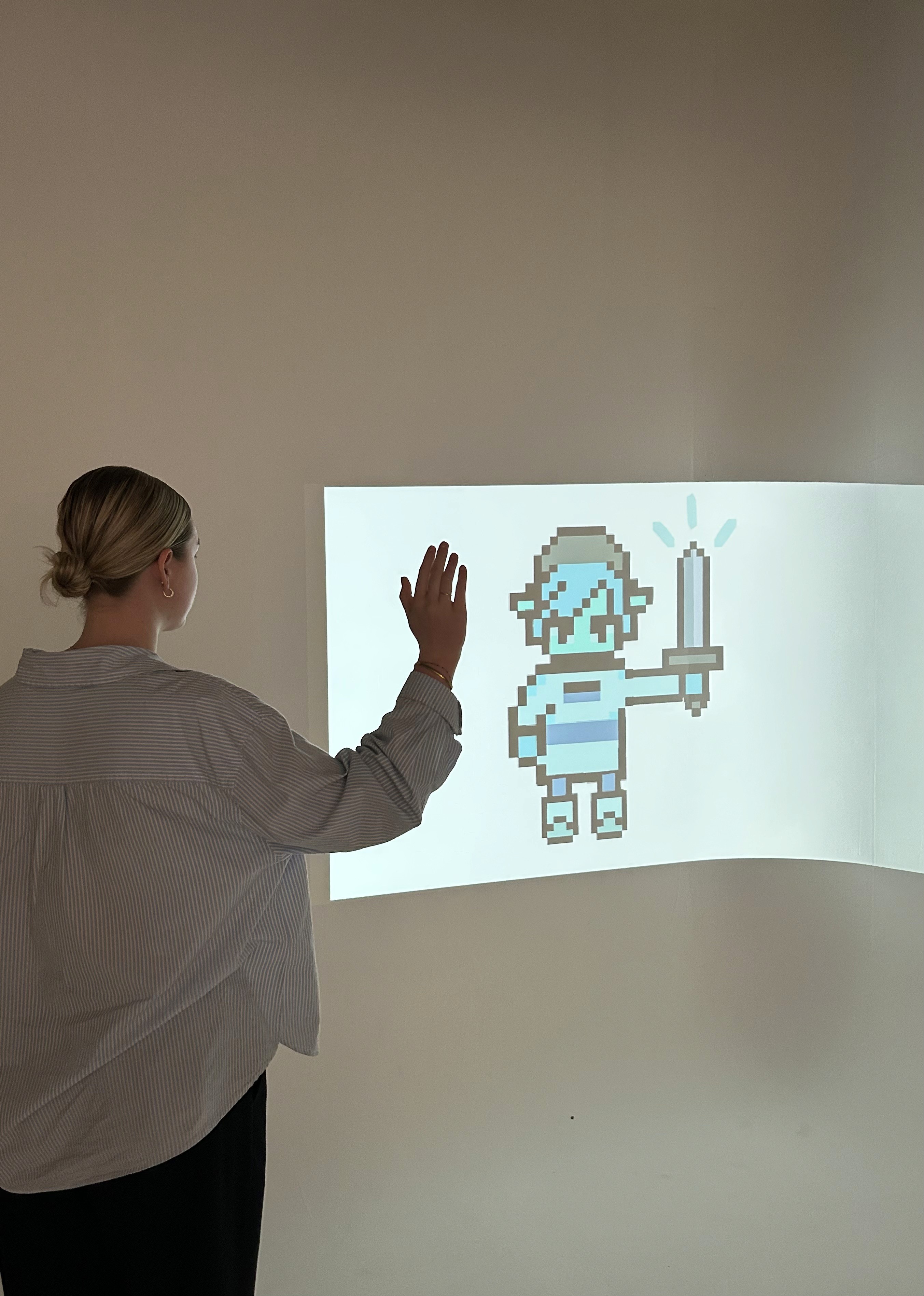
Pixel Hero reimagines the 1995 Transparent Nintendo Game Boy as an interactive installation that critiques manipulative design in contemporary gaming culture.

Using gesture-detection code built in p5.js and Google Teachable Machine, the installation brings
its characters to life through movement, using AI intentionally
to make play more responsive rather than more addictive.

Pixel Hero reimagines the 1995 Transparent Nintendo Game Boy as an interactive installation that critiques manipulative design in contemporary gaming culture.


Using gesture-detection code built in p5.js and Google Teachable Machine, the installation brings its characters to life through movement, using AI intentionally to make play more responsive rather than more addictive.


The Game Boy’s see-through casing informed a key insight: transparency as a design principle. Pixel Hero brings that honesty back to play, focusing on what makes gaming fun: creating your own character and actually moving your body to play.

The Game Boy’s see-through casing informed a key insight: transparency as a design principle. Pixel Hero brings that honesty back to play, focusing on what makes gaming fun: creating your own character and actually moving your body to play.


The Game Boy’s see-through casing informed a key insight: transparency as a design principle. Pixel Hero brings that honesty back to play, focusing on what makes gaming fun: creating your own character and actually moving your body to play.

Back to other projects

Project Timeline


Project Timeline


Brief

How might a Powerhouse Museum artefact be transformed into an interactive installation?

How might a Powerhouse Museum
artefact be transformed into an
interactive installation?

Approach

I began by researching the 1995 Transparent Game Boy alongside contemporary gaming culture, comparing how its simple, visible mechanics contrast with the hidden engagement loops and reward systems of modern games.


Journey mapping shaped a three-stage experience of initiation, interaction and battle, which I designed in Figma and coded as
an interactive projection in p5.js. Iterative prototype testing then refined each interaction so it flowed intuitively.

I began by researching the 1995 Transparent Game Boy alongside contemporary gaming culture, comparing how its simple, visible mechanics contrast with the hidden engagement loops and reward systems of modern games.


Journey mapping shaped a three-stage experience of initiation, interaction and battle, which I designed in Figma and coded as an interactive projection in p5.js. Iterative prototype testing then refined each interaction so it flowed intuitively.

Process

Journey mapping the sequence of interactions to shape a clear, intuitive flow across all three stages.

Journey mapping the sequence of interactions to shape a clear, intuitive flow across all three stages.

Low-fidelity Figma prototype of the mobile character customisation interaction.

Low-fidelity Figma prototype of the mobile character customisation interaction.

Low-fidelity prototype of the gesture-detection interaction, built with Google Teachable Machine and p5.js.

Low-fidelity prototype of the gesture-detection interaction, built with Google Teachable Machine and p5.js.

User-testing prototypes

User-testing prototypes

Refining prototypes and continuing to user test with projected gesture-detection interactive stage.

Refining prototypes and continuing to user test with projected gesture-detection interactive stage.

Insights

What playtesting revealed about making a physical game feel intuitive.

What playtesting revealed about making a physical game feel intuitive.

01 / PLAYTESTING

People learn by playing

Testing showed that players skipped instructions and went straight to interaction. The experience needed to teach through play.

02 / INTERFACE

The physical is the interface

The transparent Game Boy, projection and gestures worked best when they felt like one coherent system rather than separate effects.

03 / TIMING

Timing changes everything

Detection latency and the closure of each interaction mattered as much as the visual response in making the battle feel satisfying.

Designed Outcome

A video walkthrough of the three-stage installation, showing how participants design their own Pixel Hero, interact with the projection and battle a final boss.

Designed Outcome

A video walkthrough of the three-stage installation, showing how participants design their own Pixel Hero, interact with the projection and battle a final boss.

LEARNINGS

The best feedback came from watching people actually play & interact.

Creative coding: building an interactive projection in p5.js

Machine learning integration: training and implementing models with Google Teachable Machine

Interaction design: designing interactions that flow intuitively without explanation

Prototyping and iteration: refining the experience through repeated testing

Experience design: structuring a three-stage journey from initiation to battle

Natalie Ellwood Portfolio ©2026

©2026

10:14:15 am